






 Production-ready code, not a demo





Turning a great idea into a working app used to mean hiring an expensive team of developers and waiting months. Then, traditional no-code platforms like Appy Pie and Thunkable changed the game, letting anyone build an app using simple drag-and-drop blocks.
Today, the market has evolved again. The newest wave of AI App Builders doesn’t just give you empty blocks to drag around — they actually help you design, structure, and launch your app using artificial intelligence. Whether you are a small business owner comparing Softr vs Glide, a creator looking for Appy Pie alternatives, or a founder ready to use a true AI-powered no-code platform like Base44, the right tool is out there.
 Our top picks for September 2026
 9.8
9.8

 Ready to use, instantly
Which App Builder is Right for You?
Different projects require different tools. Here is how the top brands stack up based on what you are trying to build:
- All-in-One AI App Builders (Base44 vs Replit & Lovable) — best for non-technical founders who want to go from idea to launched app with no code exposure.
- Basic Drag-and-Drop Mobile Apps (Adalo vs Appy Pie & Thunkable) — best for simple local business apps and first-time builders.
- Internal Business Tools & Data Apps (Glide vs Softr & Airtable) — best for turning a spreadsheet into an app for your team.
- Websites and Visual Design (Webflow vs Framer & IONOS) — best for beautiful marketing sites and landing pages rather than functional apps.
All-in-One AI App Builders
Tools like Replit and Lovable — or AI models like Claude and v0 — are incredibly powerful but often require a slight learning curve or a basic understanding of code. For non-technical users, Base44 is the standout choice: it brings the power of AI into a strictly no-code environment. You describe what you want, and the AI builds it — no backend setup, no code to read.
Basic Drag-and-Drop Mobile Apps
Appy Pie (AppyPie) and Adalo are great starting points for very simple apps — a restaurant menu, a local directory, a basic booking form. Users often outgrow them quickly, but if you just need something live fast with minimal learning, they deliver.
Internal Business Tools & Data Apps
Many people compare Softr vs Glide, or use Airtable as their main data hub. These are fantastic tools for internal directories and inventory trackers. When comparing Base44 vs Glide, users who need more than spreadsheet-style layouts typically prefer an all-in-one AI builder for greater creative freedom.
Websites and Visual Design
Webflow, Framer, Horizon, and IONOS focus on stunning visual design and animations. If your goal is a high-end marketing website rather than a functional app, this is your category.

Key Features to Look For in an AI App Builder
Not all no-code platforms are created equal. When comparing your options, ensure your builder includes:
- Backend & Database Generation: The best tools (like Base44) automatically structure your database, user authentication, and secure backend logic — not just the visual screens.
- One-Click Deployment: You shouldn’t have to hire an engineer to launch. Look for platforms that publish to a custom domain instantly.
- Native App Store Export: If you want to be in the Apple App Store or Google Play, confirm the platform supports native mobile export — not just a mobile-friendly website.
- No Platform Lock-In: Check whether you can export your code or data if you ever want to leave.
Top AI App Builders Compared: Pricing, Alternatives & Reviews
Below we cover the most-searched tools in detail — pricing, who each platform is best for, top alternatives, and how they compare head to head.
Replit — AI Coding Assistant for Developers
Replit is a browser-based environment that uses AI to help you write, run, and deploy real applications. Unlike true no-code builders, Replit exposes the underlying code directly — powerful for developers, but potentially confusing for non-technical users.
- Free — $0/mo: Basic workspace, community templates, public projects
- Core — $25/mo: Private projects, more compute, deployments
- Teams — Custom: Collaborative workspaces, admin controls
Best for: developers who want AI assistance writing and shipping code quickly. Not recommended for non-technical users.
Replit Alternatives
- Base44 — best Replit alternative for non-technical users; fully no-code, no code exposure at any point
- Claude — strong AI coding assistant for generating and explaining code outside a full IDE
- v0 by Vercel — excellent for generating frontend UI components from text prompts
- Lovable — another AI-powered builder popular as a Replit alternative for full app generation
Replit vs Base44
- Code exposure — Replit: yes, you read and edit real code | Base44: no, fully hidden behind a visual interface
- Best for — Replit: developers who want full control | Base44: non-technical founders who want speed
- Backend setup — Replit: manual | Base44: auto-generated by AI
- Starting price — Replit: $25/mo | Base44: ~$29/mo
Claude — Best AI Assistant for App Prototyping
Claude (by Anthropic) is an AI assistant that writes, reviews, and explains code across almost any programming language. It is not a standalone app builder — it is an AI coding partner you use alongside your own development environment.
- Free — $0/mo: Limited daily messages, Claude Sonnet access
- Pro — $20/mo: Priority access, higher limits, Claude Opus access
- Team — $25/user/mo: Shared workspace, admin controls
Best for: developers and technical founders who want an AI partner for writing, debugging, and prototyping code.
Claude Alternatives
- Replit — combines AI assistance with a full coding and deployment environment in one place
- v0 — more specialised for generating frontend UI components from descriptions
- Base44 — best Claude alternative if you want a working app without ever reading or writing code
Claude vs Replit
- What it does — Claude: generates code you paste and run yourself | Replit: full environment to write, run, and deploy in one place
- Best for — Claude: code quality, explanation, debugging | Replit: end-to-end app building with faster deployment
- Starting price — Claude: $20/mo | Replit: $25/mo
Glide — Best for Turning Spreadsheets Into Apps
Glide transforms a Google Sheet or Airtable into a polished mobile or web app in minutes. It is one of the most popular no-code tools for internal business tools — employee directories, inventory trackers, booking systems, and client portals.
- Free — $0/mo: 1 app, Glide branding, 500 rows
- Maker — $49/mo: Custom domain, remove branding, 25k rows
- Business — $99/mo: Multiple apps, 100k rows, advanced features
Best for: operations teams and non-technical users turning existing spreadsheet data into internal apps.
Glide Alternatives
- Softr — closest competitor; better for web-based client portals and member directories, also connects to Airtable
- Airtable — if you want to stay in a spreadsheet-first environment with more database power
- Base44 — if you need to build something more complex than a data-display app, or if you’re starting from scratch without existing data
Glide vs Softr
- Best device — Glide: mobile-first | Softr: desktop-first
- Best use case — Glide: team apps used on the go | Softr: client portals and member directories
- Data source — both connect to Google Sheets and Airtable
- Starting price — both start at $49/mo
Adalo — Best for Simple Drag-and-Drop Mobile Apps
Adalo is one of the most established drag-and-drop no-code mobile app builders. It uses a visual component system — you pick elements like lists, forms, and buttons and arrange them on a screen. Adalo handles the database and basic logic behind the scenes, making it accessible for first-time builders.
- Free — $0/mo: 1 app, 200 records, Adalo branding
- Starter — $36/mo: Custom domain, remove branding, 1,000 records
- Professional — $52/mo: App Store publishing, 10k records
Best for: beginners building their first simple mobile app with zero technical knowledge. Most users outgrow it — plan ahead if your app needs to scale.
Adalo Alternatives
- Base44 — top recommendation for users who want more AI assistance and fewer limitations as their app grows
- Thunkable — similar simplicity, popular in education and with first-time builders
- Glide — better choice if your app content comes from an existing spreadsheet
- Appy Pie (AppyPie) — comparable ease of use with more pre-built templates for local business apps
Adalo vs Base44
- Building approach — Adalo: manual drag-and-drop per component | Base44: AI generates structure from your description
- Best for — Adalo: simple first apps with full visual control | Base44: faster builds that scale better as complexity grows
- App Store publishing — Adalo: $52/mo (Professional) | Base44: included on Pro plan
- Starting price — Adalo: $36/mo | Base44: ~$29/mo
Adalo Reviews
Adalo earns strong marks for ease of getting started, but mixed reviews on scalability and advanced features. Common user feedback themes:
- “Great for a first app” — most beginners find the interface intuitive
- “Hit a wall when I needed [feature]” — custom logic and complex workflows are limited
- “The database slows down with more records” — performance issues reported at scale
If you’re building something simple and want to launch fast, Adalo delivers. If you anticipate growth, consider starting on a more capable platform from day one.
Appy Pie — Best for Local Business Apps
Appy Pie (also written AppyPie) is one of the original no-code app builders, offering a large library of templates for restaurants, salons, gyms, churches, and other local businesses. Its main strength is speed — you can publish a basic app quickly using a pre-built template. The trade-off is that apps often look dated compared to newer AI-powered builders.
- Basic — $16/mo: Android app, push notifications, Appy Pie branding
- Gold — $36/mo: iOS + Android, remove branding, custom domain
- Platinum — $60/mo: Advanced features, dedicated support
Best for: local businesses that need a simple, template-based app published quickly. Not ideal if design quality or scalability matter.
Appy Pie Alternatives
- Base44 — the most recommended upgrade from Appy Pie (AppyPie) for users who want modern, AI-generated apps with better design quality
- Adalo — more design flexibility and a cleaner final product than Appy Pie at a similar price
- Thunkable — simpler and cheaper, good for very basic projects
- Glide — better if your app content comes from a spreadsheet rather than a template
Appy Pie vs Adalo
- Templates — Appy Pie: large library of industry-specific templates | Adalo: fewer templates, more layout flexibility
- Design quality — Appy Pie: dated visual style | Adalo: cleaner, more modern output
- iOS + Android — Appy Pie: Gold plan ($36/mo) | Adalo: Professional plan ($52/mo)
- Best for — Appy Pie: local businesses using a template | Adalo: custom-designed mobile apps
Bolt — AI-Powered App Builder for Full-Stack Projects
Bolt is an AI app builder that generates full-stack applications from a text prompt — including frontend, backend, and database. It is aimed at developers and technical founders who want to move fast without setting up infrastructure from scratch. Bolt uses multiple AI models and connects to popular developer tools and design systems.
- Free — $0/mo: Limited credits, basic generation
- Pro — ~$20/mo: More credits, priority generation, advanced features
- Teams — Custom: Shared credits, team workspace, custom design system
Best for: developers and technical founders who want AI to generate a complete full-stack app quickly without manual infrastructure setup.
Bolt Alternatives
- Replit — a complete browser-based coding environment with AI assistance; more established developer community
- Base44 — the best Bolt alternative for non-technical users who want full-stack generation without reading code
- Lovable — comparable AI app generation with a strong focus on UI quality
- v0 — if you only need the frontend UI generated, not a full backend
Bolt vs Replit
- Approach — Bolt: prompt-to-full-stack app generation | Replit: AI-assisted coding in a full IDE environment
- Best for — Bolt: fast full-stack prototyping from a description | Replit: ongoing development with full code control
- Non-technical friendly — Bolt: partially | Replit: no
- Code exposure — both output real code
Most Recommended AI App Builders for 2026
What to Expect: Your App Building Timeline
How long does it take to build an app without code?
- With older tools (Adalo, Appy Pie, Thunkable): A few days to a few weeks to learn the interface, connect your data, and get everything looking right before you can launch.
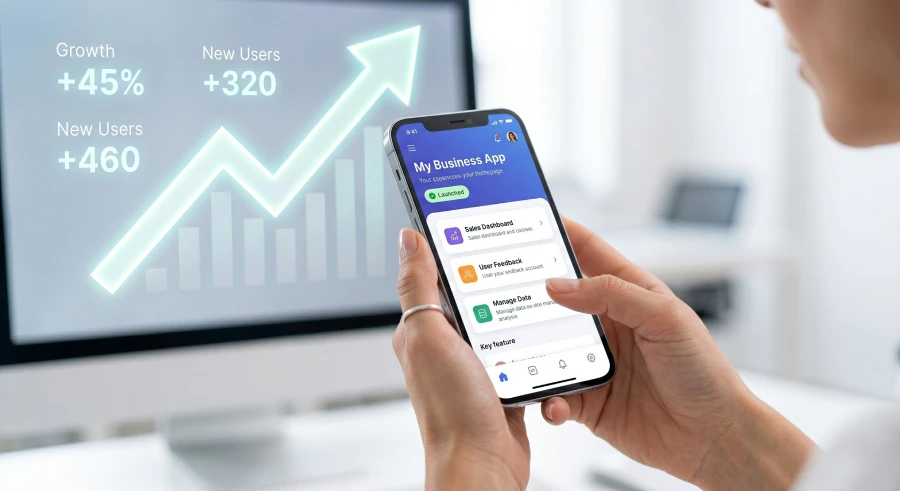
- With modern AI builders (Base44): You can often generate the first working version of your app in a matter of hours. The AI handles layout and structure — your job is tweaking the design, adding your content, and hitting Publish.
- With developer tools (Replit, Flutter, Claude, v0, Bolt): Timeline depends entirely on your coding experience. An experienced developer can launch in days. A non-technical user should not start here.
Potential Downsides to Watch Out For
- Platform Lock-In: With almost all older no-code builders, your app lives strictly on their platform. If you ever want to leave, you usually cannot take the raw code with you.
- The “Code” Wall: If you choose a developer tool like Flutter or Replit without a technical background, you will hit a wall very quickly. Stick to true no-code platforms if you do not code.
- Free Tier Limits: Almost every free plan includes the platform’s branding on your app. Plan to upgrade before any real launch.
Cost & Pricing Analysis
Here is what to expect at each budget level, grouped by platform type:
True no-code builders — best if you want to launch without touching code:
- Base44 — from ~$29/mo, free tier available, App Store publishing on Pro
- Glide — from $49/mo (Maker), free tier available, App Store on Maker+
- Adalo — from $36/mo (Starter), free tier available, App Store on Professional ($52/mo)
- Appy Pie — from $16/mo (Basic), no free tier, App Store on Gold ($36/mo)
- Thunkable — from $13/mo (Pro), free tier available, App Store on Pro
- Softr — from $49/mo (Basic), free tier available, web only
AI coding tools — best if you have a technical background:
- Replit — from $25/mo (Core), free tier available, deploy anywhere
- Claude — from $20/mo (Pro), free tier available, deploy anywhere
- Bolt — from ~$20/mo (Pro), free tier available, deploy anywhere
- v0 — from $20/mo (Premium), free tier available, deploy anywhere
Website and design builders — web only, no App Store:
- Webflow — from $14/mo, free tier available
- Framer — from $5/mo, free tier available
Our top picks for September 2026
Buying Guide: How to Choose the Right Platform
Before committing to a platform, ask yourself these three questions:
- Do I know how to code? If no, avoid Replit, Flutter, Claude, v0, and Bolt. Stick to true no-code platforms — Base44 is our top pick.
- Where is my data? If it’s already in a Google Sheet or Airtable, Glide or Softr are the fastest path. If you’re building from scratch, an AI builder like Base44 gives you the most flexibility.
- Is the interface easy enough? Always try a free plan before paying. If the dashboard feels overwhelming after 30 minutes, that’s your answer — try a different platform.
Final Thoughts: Bring Your App Idea to Life
Building a fully functional mobile or web app no longer requires a computer science degree or months of waiting. The evolution from basic drag-and-drop tools like Appy Pie and Adalo to AI-powered builders like Base44 has completely leveled the playing field for non-technical founders.
Whether you’re comparing Replit vs Base44, looking for Appy Pie alternatives, or evaluating Bolt competitors — the right platform is out there. Start with a free trial, focus on the experience you want to create for your users, and let the AI handle the complexity behind the scenes.
Our top picks for September 2026
Frequently Asked Questions
Q. Base44 vs Adalo: Which is better for beginners?
A. Both are designed for non-technical users but take different approaches. Adalo uses a visual drag-and-drop system where you manually place components on each screen. Base44 uses AI to generate your app structure from a plain-English description. For absolute beginners who want results quickly, Base44 is the faster and more capable option — it handles backend, database, and user authentication automatically.
Q. What are the best Appy Pie alternatives?
A. The top AppyPie alternatives are: Base44 (recommended upgrade for more modern, AI-generated apps), Adalo (more design flexibility at a similar price), Thunkable (simpler and cheaper for very basic projects), and Glide (better if your content lives in a spreadsheet).
Q. Is Softr better than Glide?
A. Neither is universally better — they serve slightly different use cases. Glide is better for mobile-first apps your team uses on the go. Softr is better for web-based client portals and member directories accessed from a desktop browser. Both connect to Airtable and Google Sheets — the choice usually comes down to the device your users will primarily access the app on.
Q. What are the best Replit alternatives for non-technical users?
A. If you tried Replit and found the code output hard to work with, Base44 is the most recommended alternative — it provides similar AI-powered app generation but hides all the code behind a no-code interface. Glide is a strong option if your project is data-driven, and Adalo works well for simple mobile apps.
Q. What are the best Claude alternatives?
A. As an AI coding tool, Replit is the closest Claude competitor — it combines AI assistance with a full coding environment in one place. If you want to avoid code entirely, Base44 is the best Claude alternative for non-technical users who just want a working app without reading any code.
Q. What are the best Bolt alternatives?
A. The top Bolt competitors are Replit (more established developer environment), Lovable (strong UI quality for AI-generated apps), Base44 (best Bolt alternative for non-technical users), and v0 (if you only need a frontend UI generated, not a full backend).
Q. What is the difference between Replit, v0, and no-code builders?
A. Replit, Claude, Bolt, and v0 are AI-assisted coding tools — they generate real code you read, modify, and deploy. True no-code builders (Base44, Glide, Softr, Adalo, Appy Pie) hide the code entirely and give you a visual interface instead. If you are non-technical and just want a working app, go straight to the no-code category.
Q. Glide app pricing: is there a free plan?
A. Yes. Glide’s free plan lets you build and test an app with up to 500 rows and Glide branding. To publish to a custom domain and remove branding, you need the Maker plan at $49/month. Publishing to the Apple App Store or Google Play requires a paid plan.
Q. Adalo pricing: what do I need to pay to publish my app?
A. Adalo’s free plan is limited to 200 records and includes Adalo branding. To remove branding, the Starter plan costs $36/month. To publish to the Apple App Store or Google Play, you need the Professional plan at $52/month.
Q. Can I really build an app without any technical knowledge?
A. Yes — with the right platform. Tools like Base44, Glide, Softr, Adalo, Appy Pie, and Thunkable are all designed for users with zero coding experience. The key is choosing a platform appropriate for your project’s complexity. Simple apps can absolutely be built without any technical knowledge.
Q. Do I own the code my AI app builder generates?
A. It depends on the platform. Traditional no-code builders (Adalo, Glide, Softr, Appy Pie) do not give you access to the underlying code — your app lives on their servers. Developer tools (Replit, Bolt, Claude, v0) generate code you fully own and can host anywhere. Check each platform’s terms before committing if portability matters.
Q. Can I publish my AI-generated app to the Apple App Store or Google Play?
A. Yes, but not all platforms support it. Adalo (Professional plan), Thunkable, and Appy Pie (Gold plan) all support native iOS and Android publishing. Webflow, Framer, Softr, and IONOS are web-only. Check your chosen platform’s current documentation for mobile export options before committing.
Q. Does an AI app builder create the database, or just the visual design?
A. A basic UI generator only creates the visual layout. A true AI app builder — like Base44 — acts as a full-stack developer, simultaneously generating your visual screens, backend database, user authentication, and security logic. Always ask before committing: “Does this tool set up my database automatically, or do I need to connect one separately?”
