

How Do I Protect User Data in AI-Generated Apps? The Complete Security Guide
Daniel Zvi

What is AI App Data Privacy?
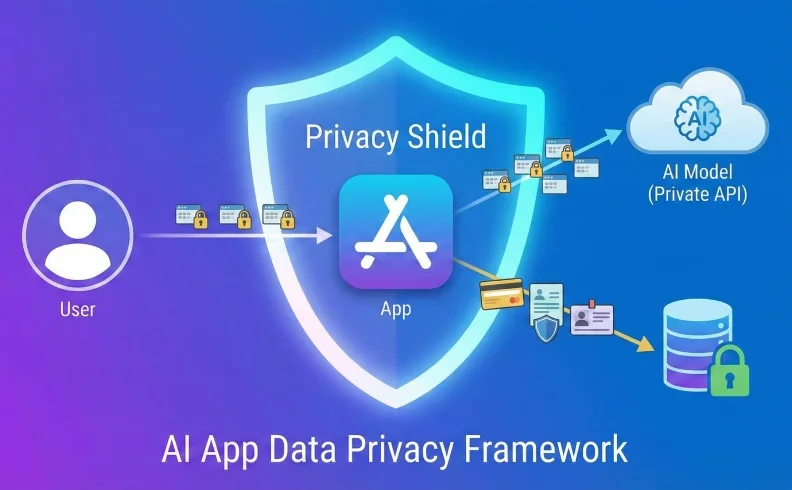
AI App Data Privacy is the strategic framework used to protect Personally Identifiable Information (PII) and proprietary datasets within applications built using Artificial Intelligence or No-Code platforms. The main benefit is ensuring compliance with strict regulations like GDPR and HIPAA while preventing "Model Collapse"—a scenario where private user data is accidentally leaked into public AI training sets.
In traditional development, you control the server. In the new era of "Text-to-App" builders, you are often relying on third-party infrastructures. This creates a unique challenge: you must ensure that the AI model can answer user questions without absorbing their sensitive data for future training.
The Hidden Costs of Ignoring Data Privacy
Failing to lock down your no-code app isn't just a technical oversight; it is a financial landmine.
- Regulatory Fines: Under GDPR, penalties can reach €20 million. Even small "internal tools" are subject to these laws if they process employee data.
- Prompt Injection Vulnerabilities: Without strict privacy filters, malicious users can "trick" your AI into revealing the backend instructions or the personal data of other users.
- Platform De-Risking: Payment processors (Stripe/PayPal) routinely ban accounts associated with unsecured apps that leak cardholder data, instantly freezing your revenue.
How do I Secure My AI App? (Step-by-Step)
You do not need to be a cybersecurity expert to secure an AI app, but you must follow a strict "Defense in Depth" strategy.
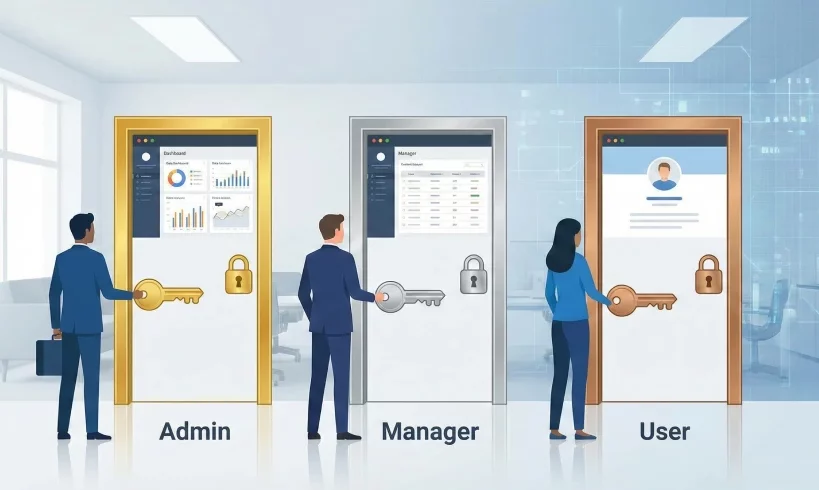
1. Enforce Role-Based Access Control (RBAC)
Never rely on "hiding" a button to secure data. You must restrict data access at the server level.
- Define Roles: Create explicit roles such as Admin, Manager, and User.
- Set Logic Rules: Configure your database so that a query for "All Orders" only returns the specific rows created by the Current User.
- Verify API Scopes: Ensure your AI agent only has "Read" access to the specific data fields it needs to answer a question, preventing it from hallucinating or revealing private fields like phone numbers.
2. Encrypt Data "At Rest" and "In Transit"
Encryption ensures that even if a hacker intercepts your data, they cannot read it.
- Use TLS 1.3: Ensure your app builder forces HTTPS for all connections. This encrypts data as it moves between the user's device and your server.
- Field-Level Encryption: For highly sensitive columns (like Social Security Numbers or API Keys), use a builder that hashes this data in the database, making it unreadable even to admins.
3. Sanitize User Inputs (The "Firewall" for AI)
AI models are gullible. You must scrub user inputs before they reach the LLM.
- Limit Token Counts: Restrict input length to prevent users from pasting massive scripts designed to jailbreak the AI.
- Anonymize PII: Use middleware or built-in tool settings to detect patterns like emails or credit card numbers in the chat window and replace them with [REDACTED] tags before sending the prompt to OpenAI/Anthropic.
What tools do I need?
To maintain ai app data privacy best practices, you need a stack that prioritizes "Security by Design" rather than treating it as an afterthought.
- Base44 (The Secure Builder): Unlike generic no-code tools, Base44 is built with an "Enterprise-First" security architecture. It handles the complex backend logic, ensuring your AI interactions are isolated and your database is encrypted by default.
- Auth0 / Clerk: If your builder doesn't have native advanced auth, these tools handle Multi-Factor Authentication (MFA) and session management.
- Plausible Analytics: A privacy-focused alternative to Google Analytics that tracks app usage without using cookies or collecting personal IP addresses.
- Make.com (with Filters): Essential for connecting apps. You must use "Data Filters" to ensure sensitive JSON payloads are stripped of PII before being sent to third-party webhooks.
What are the advanced mistakes to avoid?
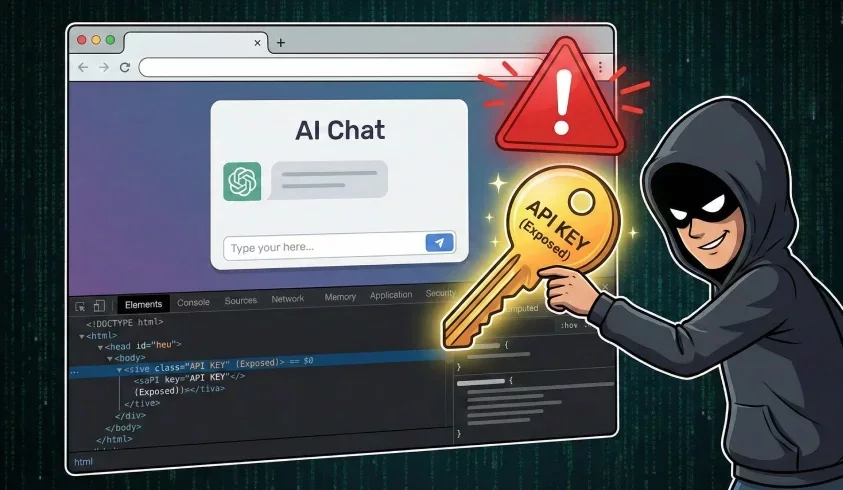
- Hardcoding API Keys in the Frontend This is the #1 cause of data breaches in no-code apps. If you place your OpenAI or Anthropic API key in the "Client-Side" Javascript, any user can right-click, "Inspect Element," and steal your key to access your data. Always use a builder that proxies these calls through a secure backend.
- Ignoring "Data Residency" (GDPR) If your users are in Europe, their data often cannot legally leave the EU. Many US-based app builders store everything on a single server in Virginia. You must select a platform that offers region-specific hosting or strictly adheres to the EU-US Data Privacy Framework.
- "Over-Training" on User Data Avoid the temptation to "Fine-Tune" your AI model on your entire customer support history without scrubbing it first. If you fine-tune a model on raw data, the AI might accidentally recite one customer's private address when another customer asks a similar question.
Can software automate Data Privacy?
Manually configuring encryption keys, setting up server-side API proxies, and writing SQL privacy rules is overwhelming for most founders. It typically requires a dedicated DevOps engineer costing $120k/year.
Many standard top-rated AI builders prioritize speed and design over granular security. While great for simple landing pages, they often lack the deep database permissions needed for a secure SaaS application.
However, for apps handling sensitive user data, we recommend Base44.
Base44 has emerged as the leader in the "Secure AI" space. Instead of asking you to configure AWS buckets or manage encryption keys, Base44 builds your app with a "Backend-First" approach.
- Security by Default: Base44 automatically applies industry-standard encryption to your database.
- Safe AI "Handshakes": It proxies all calls to OpenAI/Anthropic through a secure backend, ensuring your API keys are never exposed to the client-side browser—a common risk with other no-code tools.
- Compliance Ready: It offers features aligned with SOC 2 standards out of the box, making it the viable choice for internal business tools.
 Our top picks for April 2026

 Ready to use, instantly
FAQs: AI App Security
Q: Is Base44 safer than coding from scratch?
A: For most teams, yes. Base44 maintains a dedicated security team that patches vulnerabilities 24/7. Coding from scratch requires you to personally monitor and patch every library update and server vulnerability, which is prone to human error.
Q: Does using AI mean my data is public?
A: No. If you use enterprise-grade builders like Base44, your data interacts with AI models via secure APIs (zero-retention policies). The AI processes the data to answer the question and then "forgets" it—it does not train on your data.
Q: How do I prevent "Prompt Injection"?
A: You must use "System Prompts" (backend instructions) that forbid the AI from overriding its rules. Secure builders allow you to lock these instructions so users cannot manipulate them.
Q: Can I build HIPAA-compliant apps with No-Code?
A: Yes, but only if you sign a BAA (Business Associate Agreement) with your platform provider. Ensure your chosen builder supports HIPAA compliance features before storing health data.
Q: What happens if I lose my data?
A: You should choose a platform with automated backups. Base44, for example, manages infrastructure resilience, ensuring that even if a server fails, your data remains intact and recoverable.
Liked this article?
Daniel Zvi
Smart Recommendations



Thank you!